Elephants never forget

Elephants never forgetDid you ever wonder where the saying, “elephants never forget” comes from?

A 2000 PBS documentary presents a striking example of elephant friendship.

The documentary “The Urban Elephant” brought viewers the touching story of Shirley and Jenny, two crippled elephants reunited at The Elephant Sanctuary in Tennessee after a 22-year separation.

Shirley, a former circus elephant, had lived for two decades in a zoo without the company of another elephant, and with a chain around her leg.

Her reunion at the sanctuary with her old friend Jenny is an astounding example of the way our four-legged friends can experience friendship, love and compassion as profound as that of humans.

Competition and the pink ribbon

competitionYears ago, I read a letter to the editor of Horse Illustrated Magazine that brought home the lesson of how much children have to teach us about competition.

It never fails to bring a tear to my eye; I hope you enjoy it, too.

Here it is, in its entirety, as written by Rhonda Goddard of Louisville, CO:

“Competition is essential.  We learn from it, our characters are shaped by it, and we crave the rivalry.  This competitive spirit is quite evident in the horse show world; few participants are unaffected by its influence.

“I am one of many who experience the thrills, woes and obsessions that accompany showing.  Like my competitors, I coordinate my season zealously, selecting the right judges, attending the correct shows, and accumulating the most points in order to achieve my self-imposed goals – high point awards, year end placings, regional and national show qualifications.

“I am driven to attain these accomplishments by nothing more than my own desire to ‘succeed’.  It took a child to remind me, however, that participation, good sportsmanship, and just plain enjoyment must always be my highest priorities.

“For several years I have judged the annual show for the Colorado Therapeutic Riding Center in Lafayette, CO.  The show hosts a variety of events, including English and Western Equitation, Trail, and Dressage, as well as fun classes such as Egg in Spoon.

“Each time I judge this show I am reminded that I do not have problems, but rather minor inconveniences, in comparison with the difficulties these students must overcome.

If we could see inside other people’s hearts

power of prayer“If we could see inside other people’s hearts” is a moving 4-minute video from the Cleveland Clinic, one of the most renowned medical centers in the United States.

I see it as a visual version of the Native American saying, “Don’t judge a person until you’ve walked a mile in their moccasins.”

Enough said.  Have a hankie ready.

The nature of wolves and the nature of man

nature of wolvesThe nature of wolves is something the average person doesn’t usually give any thought to.  And yet most Native Americans are very aware of the wolf nation, their gifts and their nature. 

So I thought it would be worth a blog post.  Because wolves are in great danger now, and they need our help.

My first introduction to the nature of wolves

Years ago, my very favorite TV show was “The West Wing”  — a fictional show about what goes on behind the scenes in the running of the presidency and our country.

One episode that stands out in my mind was the fictional workday during which senior staff met with fringe special interest groups.  Not the kind of special interest groups that have expensive lobbyists behind them.   Special interest groups that have no money but a forward-thinking idea.

One might call them seventh generation” ideas.

No one in the West Wing ever looked forward to those meetings; they considered the people coming to meet with them to be promoting off-the-wall causes.  But they had to take these meetings; it was part of their job.

And here was the great part:  by the end of each meeting, each west wing staff member usually had “got it” – they were convinced by the presentations and ready to champion their cause.  And the viewer got educated as we watched each presentation, too.

The fictional proposal that stands out in my mind was the presentation made to fictional White House Press Secretary CJ Cregg for the protection of wolves.  Specifically a $900 million highway for wolves that facilitate their safe travel from Yellowstone to Banff National Park in Canada.

I learned that wolves have to breed with many packs in order to keep from becoming extinct.  Because if they only breed within their pack, they’ll produce offspring that are genetically weaker, thus endangering their long-term survival.  Breeding with other packs assures their long-term survival.  What’s remarkable to me about that fact is that: the wolves somehow know this!

Their territories often cover 1,000 square miles.

But in the 1990s, Pluie, a gray wolf with a radio collar was tracked as she traveled within a 40,000 square mile range in pursuit of new breeding grounds.  Yes, that was 40,000 square miles.  Not a typo.

The journeys of these wolves can be dangerous: across highways, housing, forests denuded of trees and over the U.S./Canadian border. Pluie, her mate and three pups were legally shot and killed by a rancher in Canada in 1995.

So the fictional proposal in this fictional TV show was to build a wolves only highway, to ensure their safe travel.

[In actual fact, there is a successful wildlife crossing bridge in Banff National Park in Canada that has reduced the animal/car collision rate by 80%.  And there are plans underway for other wildlife crossing bridges in various parts of the United States.]

Initially entrenched in the stand that, “this will never happen,” CJ ends up a passionate advocate for wolves and their safety:  “Why can’t we build schools and protect wildlife at the same time?”  Good question.

Of course, that was all fiction.  Now lets move on to reality.

What is the 7th Generation principle and why do you need to know about it?

hillsideWhenever I mention the 7th Generation principle to most people, they think I’m talking about laundry detergent.

I’m always surprised that more people don’t know the origin of the term, so I felt it deserved a post of its own.

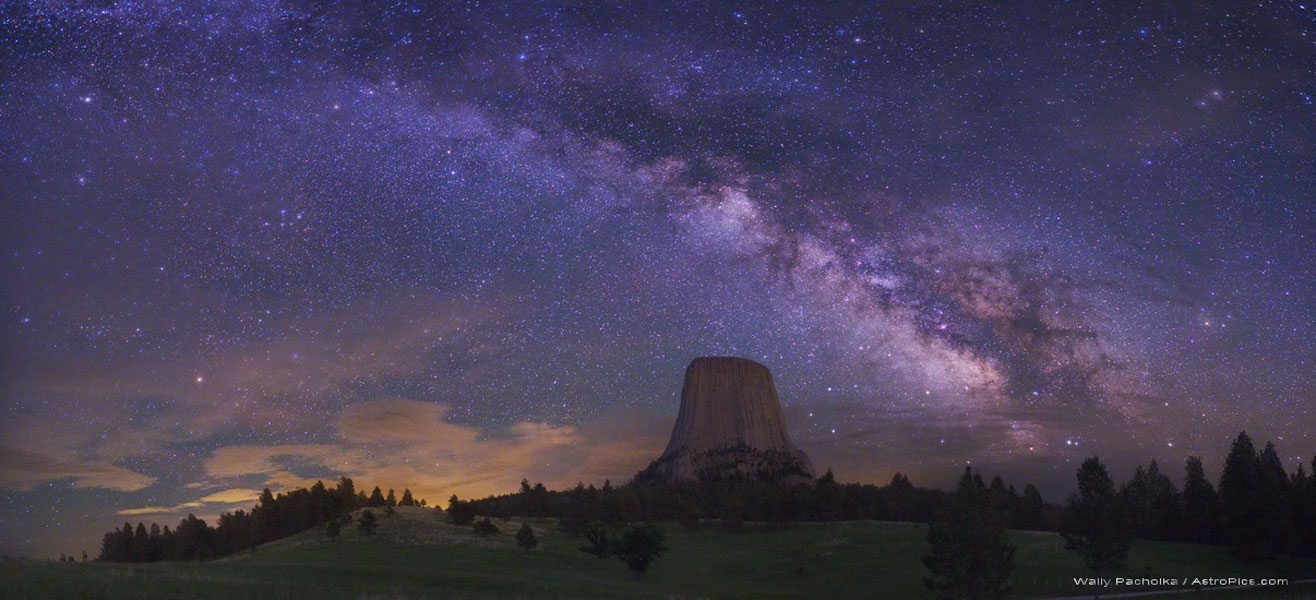
The “7th generation” principle taught by Native Americans says that in every decision, be it personal, governmental or corporate, we must consider how it will affect our descendents seven generations into the future.  So that the pristine sky, field and mountains in this photo will still be here for them to enjoy.

A generation is generally considered to be 25 years, so that’s 175 years.

It is clearly not embraced by most governments and corporations in the world today. I mean, when was the last time any of us thought about who’s coming along seven generations from now?

The 7th generation principal was so important to Native American cultures that it was codified in the Iroquois Great Law of Peace. To my knowledge, all Native American and indigenous tribes throughout the world embrace this teaching.

Those of us descended from the European culture have generally not given it a second thought.

Long before environmentalists got us thinking about “carbon footprints” and “sustainability,” indigenous peoples lived in balance with the world around them.

It’s even defined in their language: